-
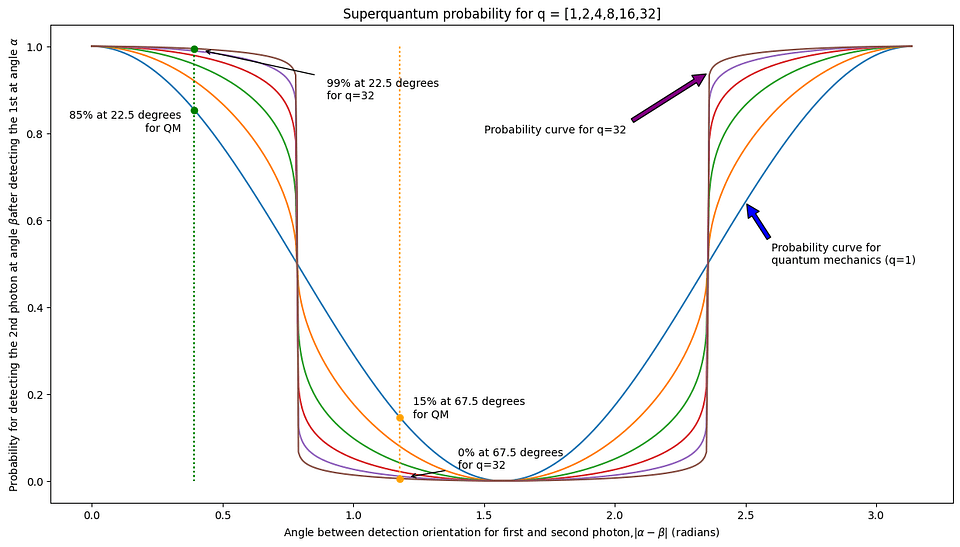
Popescu-Rohrlich photons
Quantum mechanics allows Einstein’s “spooky action at a distance” — but only up to a point. By following the mathematics behind Bell’s inequalities, we discover where this mysterious limit to non-locality comes from, and why there is still room beyond quantum mechanics.
-
Tsirelson’s bound: How Nature limits non-locality
Quantum mechanics allows Einstein’s “spooky action at a distance” — but only up to a point. Why does Nature limit non-locality, and what would lie beyond that quantum boundary?
-
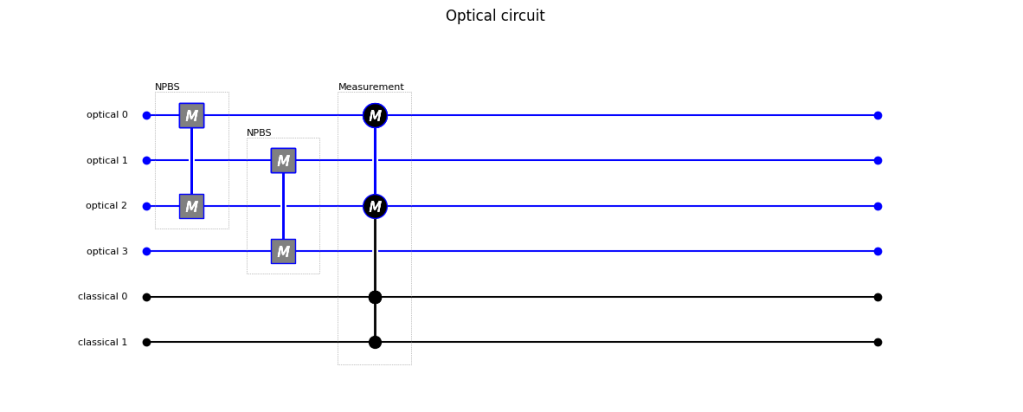
Modeling Quantum Optical Experiments in Python
Can we recreate famous quantum optics experiments in Python? Starting with single photons, wave plates and beamsplitters, we build up to entanglement, the Hong–Ou–Mandel effect, and Alain Aspect’s violation of Bell’s inequalities.
-
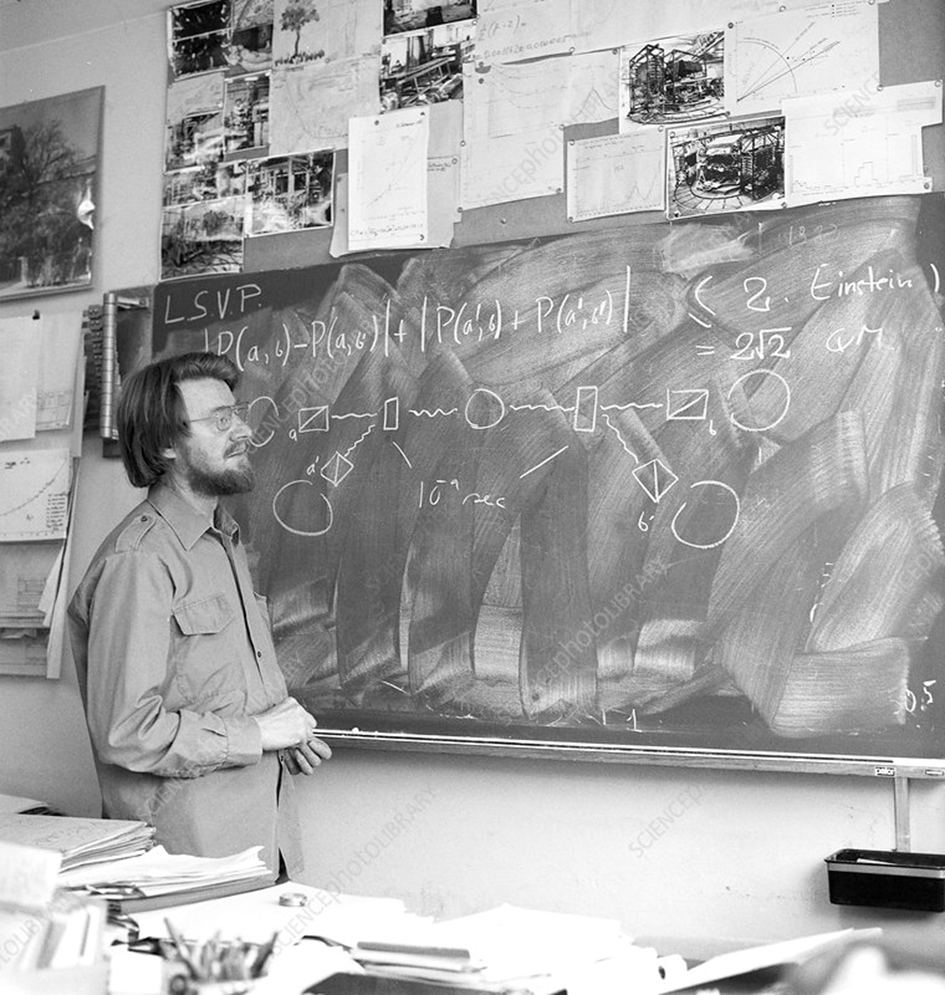
EPR, Bell’s inequalities, and Alain Aspect’s experiments
Einstein thought quantum mechanics was missing something. Bell found a way to test that idea, and Alain Aspect put it to the experiment. The result revealed one of quantum mechanics’ strangest features: Nature really is non-local.
-
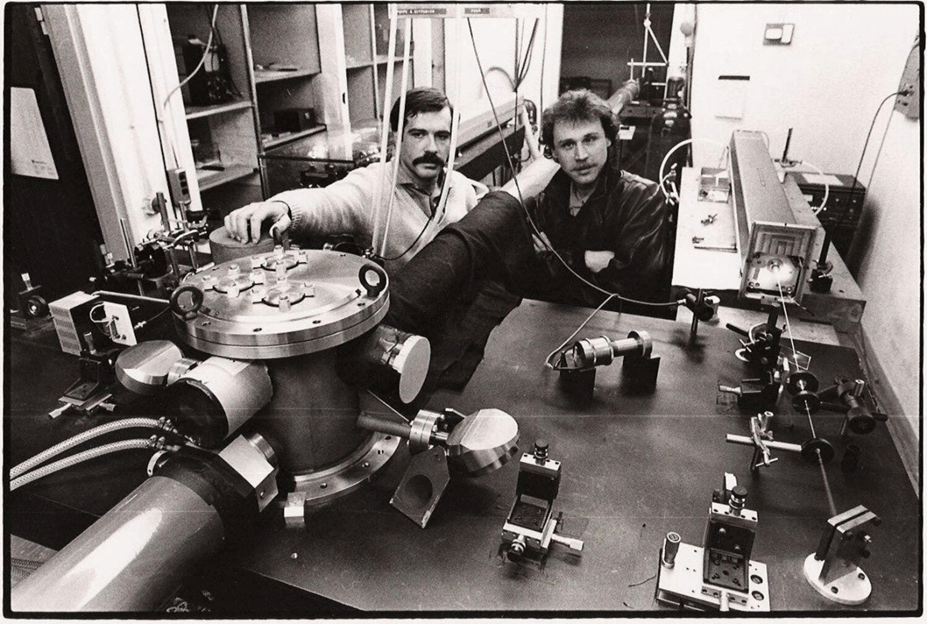
The experiment that proved Einstein wrong: entangled photons show spooky action at a distance
Einstein called it “spooky action at a distance.” Decades later, experiments with entangled photons put his objections to the test — and showed that the strange correlations predicted by quantum mechanics are real.
-

Quantifying Einstein’s ‘Spooky action at a distance’
How do you measure something as strange as “spooky action at a distance”? Bell’s inequalities turn Einstein’s debate with quantum mechanics into numbers — revealing correlations that no local classical theory can explain.
-
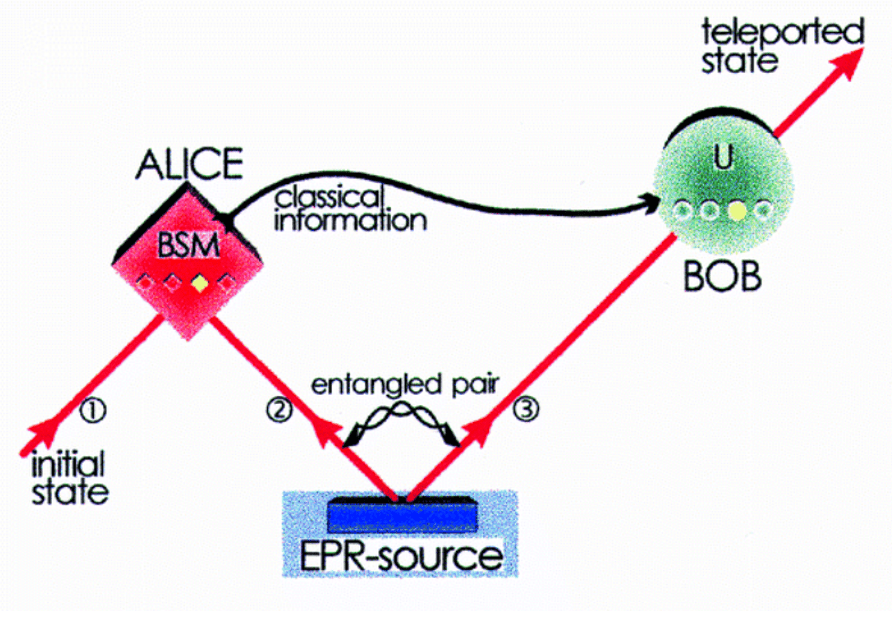
Quantum teleportation with FockStateCircuit
Quantum teleportation sounds like science fiction, but the underlying protocol is surprisingly concrete. Using FockStateCircuit, we simulate how entanglement and measurement can transfer an unknown quantum state without physically sending the photon itself.
-
Simulation of Greenbergen-Horne-Zeilinger entanglement creation
We replicate (in Python) the experiment from the group of Anton Zeilinger in 1999 where for the first time entanglement between more than two photons was demonstrated in a so-called GHZ state.
-
EPR Paradox and Bell inequality: Is the world real?
We look at the history of the discussion triggered by Einstein in his famous EPR paper. We encounter different versions of Bell’s inequality. Finally we show how we can simply simulate the experiments from Alain Aspect in the 80’s in which the fact that quantum theory violates Bell’s inequality was first demonstrated.
-
Building quantum optical systems in Python
In Python the module ‘FockStateCircuit’ can model (quantum) optical quantum circuits with well-defined numbers of photons ( 0,1,2,3, …photons per channel). With ‘FockStateCircuits’ we can model optical components, like beamsplitters or waveplates. Circuits can also contain classical channels to store measurement results. It is easy to replicate famous experiments like Alain Aspects Nobel Prize winning…
-
Subscribe
Subscribed
Have a WordPress.com account? Log in now.

